
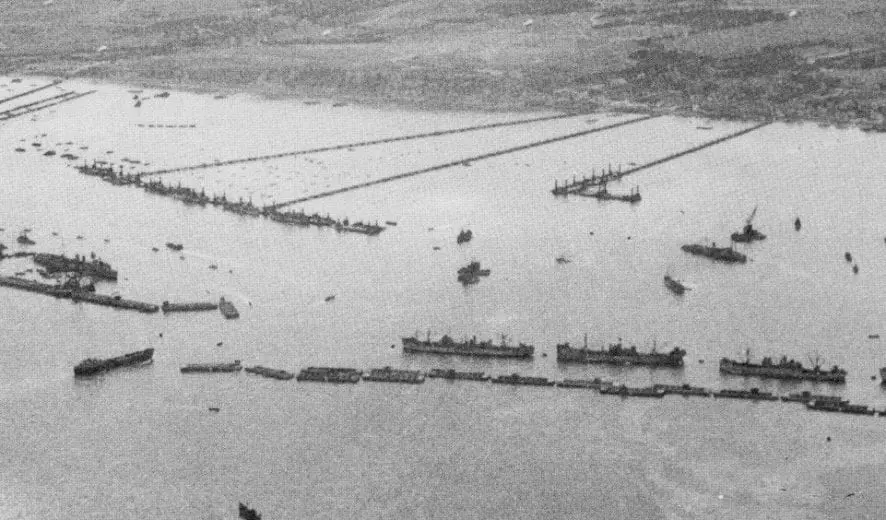
Leith has always held a strong history in Edinburgh but perhaps one of the less known achievements is the involvement in constructing the Mulberry Harbours used at D-day; floating harbours which were used to provide Port facilities in the later days of World War 2, until an existing French Ports could be captured.
The Mulberry Harbours consisted of 3 parts – pier-heads & quays, floating roadways, and breakwaters. It was the pier-heads which were constructed in Leith in between 1943-1944, within the space where Ocean Terminal is now located.
Over 400 parts were required for the Mulberry Harbours, each constructed in areas of the UK. Once complete, they were shipped to Normandy across the English Channel in June 1944 for D-day and constructed within a matter of days.
Unfortunately due to the worst storm seen at Normandy in 40 years, only one of the two Mulberry Harbours survived long enough to play a defining part in the War, being used to provide equipment and supplies to troops invading the German military occupied nations.
The Mulberry Harbours played a vital part in the end of World War 2, allowing the Allied troops access through the Atlantic Wall and a successful invasion of mainland Europe, most of which was under German military control. Following their placement in June 1944, the surviving Mulberry Harbour remained in use until the October, with the war finally ending in the August 1945.
